Gondola Shape Explained – The Ferro, Hull, and Balance
A practical breakdown of gondola geometry: asymmetric hull, ferro symbolism, stern lift, and how design choices help single-oar navigation in tight canals.
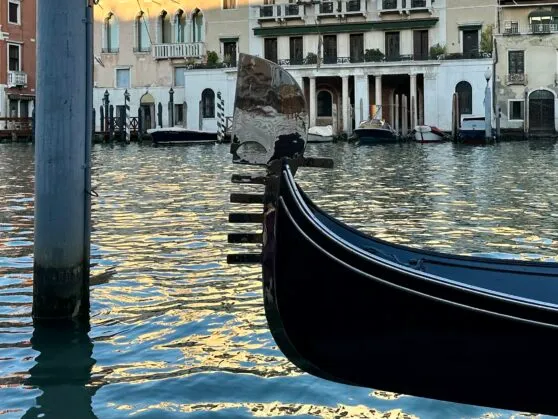
Venice made the gondola asymmetric so a single oar on starboard could propel and steer without tipping. The ferro — the iron prow — counterbalances the gondolier’s weight and encodes Venetian symbolism. Every curve serves a canal constraint.
Geometry at a Glance
- Offset: ~35 cm towards port for balance under single-oar propulsion.
- Length/Weight: ~10.87 m / ~350 kg (varies by maker and fittings).
- Freeboard: Low profile for bridge clearances.
- Stern lift: Helps pivot in tight turns.
Design is choreography: hull asymmetry, stern lift, and ferro weight together enable precise, quiet navigation.
The Ferro: Counterweight & Symbol
- Balance: Counteracts the gondolier’s mass at the stern.
- Symbolism:
- Six prongs: Venice’s sestieri.
- S-shaped curve: The Grand Canal.
- Backward prong: Giudecca.
- Variations: Makers add subtle stylistic signatures.
Symbol Table
| Ferro Element | Meaning |
|---|---|
| Six teeth | Sestieri |
| S-curve | Grand Canal |
| Back prong | Giudecca |
| Crown motifs (optional) | Doge/history |
Forcola: The Sculpted Oarlock
The forcola is a carved walnut piece with notches for different strokes. It’s both tool and sculpture.
| Position | Use |
|---|---|
| High notch | Power stroke |
| Side notch | Maneuver/pivot |
| Low notch | Glide/maintain speed |
Watch the hands: control comes from micro-adjustments against the forcola, not brute force.
Handling in Narrow Canals
- Single oar = propulsion + steering.
- Bow curve softens contact; stern lift enables tight swivels.
- Low hull height reduces windage; eases low bridge passes.
Pro Move
The "reverse pry": push the oar forward, then lever against the forcola to pivot sharply with minimal wake.
Craft, Materials, Maintenance
- Hull: Oak/larch planking tuned for resilience vs weight.
- Ferro: Iron/steel, often maker-marked.
- Varnish: Protects wood; contributes to the iconic black sheen.
- Trim: Periodic rebalancing as fittings change.
Myths vs Facts
- Myth: Symmetry is better. Fact: Asymmetry is essential for single-oar control.
- Myth: The ferro is purely decorative. Fact: It’s a counterweight and symbol.
Bottom Line
Form follows canal. Every curve, iron, and notch solves Venice’s tight, shallow, tide-touched waterways with a single oar and silent precision.
About the Author

Gondola Insider
I created this guide to help you ride Venice’s waterways with confidence — clear booking advice, thoughtful etiquette tips, and stories to enrich what you’ll see and feel from the boat.
Tags
Comments (0)
Loading comments...